Art Therapy and Back to School Anxiety
Back-to-school anxiety is a highly common reaction to the end of summer, usually driven by a fear of the unknown, academic pressures, or changes in daily routines. For most children and teens, these jitters fade within the first two to three weeks of the school year as schedules become familiar.
Anxiety in children and adolescents doesn’t always look like worry. Experts from Harvard Health and Geisinger note that it frequently manifests as:
- Physical complaints: Frequent headaches, stomachaches, fatigue, or low appetite.
- Behavioral shifts: Increased irritability, emotional outbursts, or sudden apathy.
- Sleep disruption: Difficulty falling asleep, frequent waking, or nightmares.
- Avoidance: Refusing to talk about school, buy supplies, or participate in school-related talk
How You Can Help Lower Back to Scho0l Anxiety
Rebuild routines early: Do not wait for the first day of school to fix sleep schedules. One to two weeks prior, incrementally shift bedtimes and wake times closer to school-year requirements.
Validate, don’t dismiss: Avoid generic phrases like “you’ll be fine”. Organizations like NAMI suggest asking open-ended questions and validating their feelings: “I know it feels intimidating to walk into a new classroom, but we can figure it out together.”
Execute a test run: Walk or drive to the school building. If allowed, visit the classroom, find the bathrooms, and practice opening lockers to eliminate the “fear of the unknown”.
Arrange a buddy system: Reach out to classmates’ parents to coordinate a low-pressure playdate or arrange for kids to walk into the school together on day one.
Control your own stress: Children mirror adult emotions. Keep your own logistical anxieties in check when discussing the upcoming school year around them
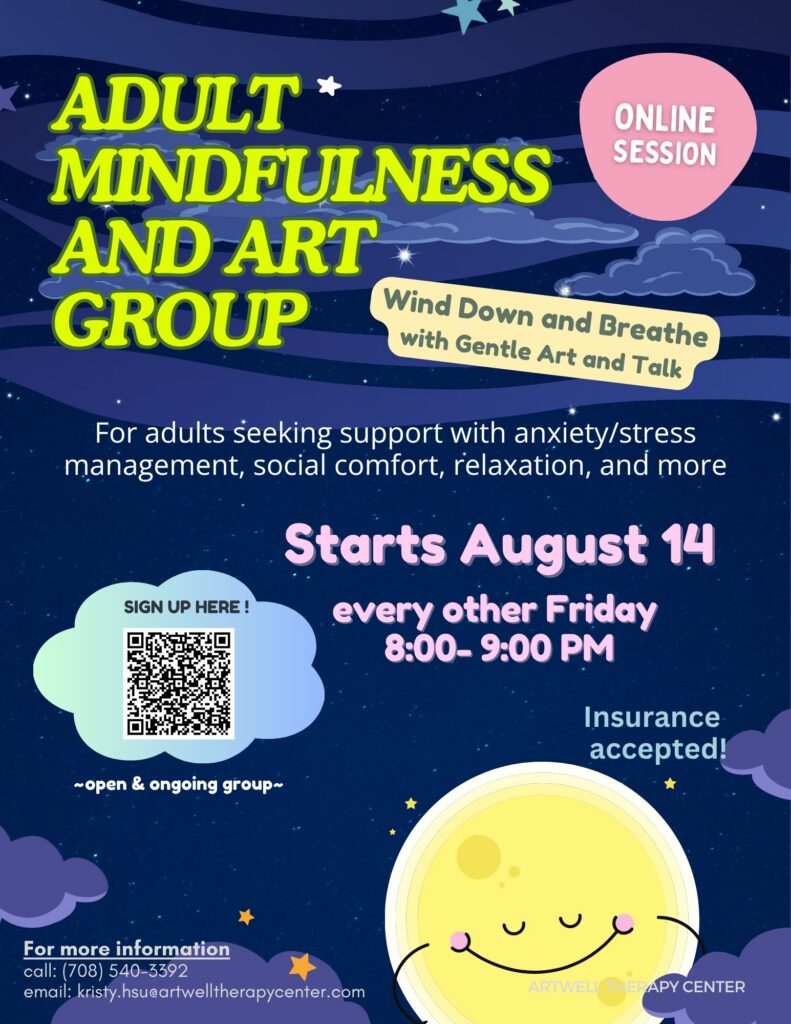
If a parent or adult is looking to help manage their own feelings of back to school anxiety, Kristy Hsu at ArtWell Therapy Center has started a virtual art therapy group to help adults process those complicated feelings.
🖌️ Art Therapy Ideas For Anxious Feelings
Art therapy offers a powerful, non-verbal outlet to process emotions, build self-esteem, and connect with your inner self. Here are some basic therapeutic activities.
- Mandalas and Repetitive Pattern Drawing
- Repetitive, structured art acts as an active mindfulness meditation. It grounds a racing nervous system by focusing attention on small, predictable motor movements.
- Trace a large circle on a blank page. Starting from the exact center, draw outward using repeating geometric shapes, dots, fine lines, or concentric rings
- When choosing supplies for the mandala, the type of medium directly affects your emotional state:
- For High Control & Structure: Choose fine-tipped markers, colored pencils, or gel pens. These require precision, which activates logical, grounding brain pathways.
- For Emotional Release & Unwinding: Choose fluid mediums like watercolors, soft pastels, finger paints, or sculpting clay. These encourage a free-flowing, less rigid process.
- Repetitive, structured art acts as an active mindfulness meditation. It grounds a racing nervous system by focusing attention on small, predictable motor movements.
💡 Important Note:
True art therapy is facilitated by a credentialed mental health professional. While doing art on your own is highly therapeutic and relaxing, working with a licensed art therapist provides clinical support for processing trauma and mental health conditions